Triple-stage filters in comparison to water softeners
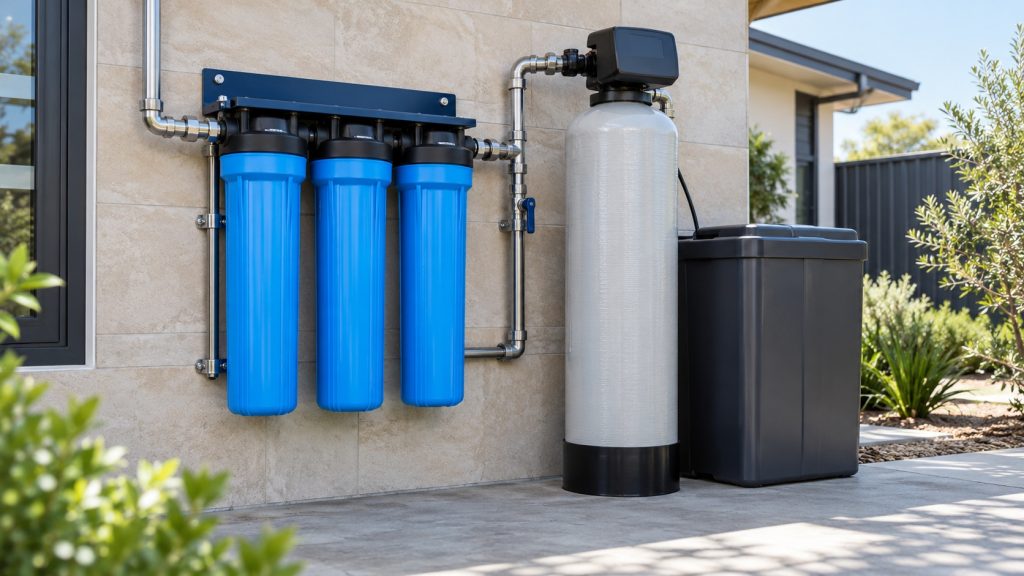
Triple-stage filters in comparison to water softeners
Choosing the right water treatment system can be confusing, especially when comparing triple-stage filters with water softeners. Both systems can improve certain aspects of household water, but they address different water quality concerns.
A triple-stage water filtration system uses three filtration stages to treat water, depending on the media used. A water softener, by contrast, primarily reduces water hardness caused by minerals such as calcium and magnesium.
At Integraflow, we help homeowners throughout Perth understand their water treatment options and find solutions based on their water source, household requirements, and specific water quality concerns. Understanding how each system works can help you decide whether a triple-stage system, a water softener, or a combination of both suits your home.
TABLE OF CONTENT
- What Is a Triple-Stage Water Filter?
- What Is a Water Softener?
- Triple Stage Filter vs Water Softener: What Is the Difference?
- Is a Triple Stage Water Filter Better Than a Water Softener?
- Can a Water Filter Replace a Water Softener?
- Water Softener and Triple Stage Filter: Can You Use Both?
- Is a Triple Stage Water Filter Suitable for Home Use?
- What About a 3 Stage Water Filter for the Whole House?
- What Should You Consider Before Choosing a System?
- Frequently Asked Questions
- Contact Integration Today
- Get advice. Get a tailored quote.
What Is a Triple-Stage Water Filter?
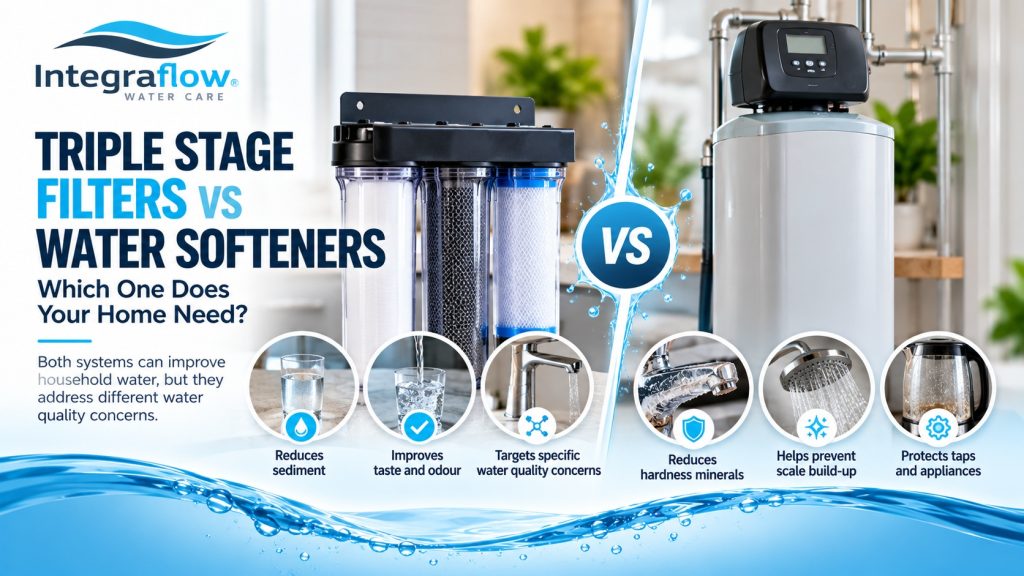
If you are asking what a triple-stage water filter is, it is a water treatment system that passes water through three filtration stages. Each stage performs a specific function, depending on the filter’s design and media.
A typical system may include stages designed to reduce sediment, improve taste and odour, or target particular substances in the water. However, the exact performance depends on the system’s specifications.
A triple-stage water filter does not automatically remove every contaminant or reduce water hardness. Check what each stage is designed to treat before choosing a system.
What Does a Triple Filtration System Do?
A triple filtration system treats water through three separate stages. These may work together to address different water quality concerns.
For example, one stage may remove particles, while another may use activated carbon to reduce certain substances that affect taste and odour. The third stage depends on the specific system.
A triple-stage system may suit households looking to improve specific aspects of their water quality, but the best option depends on the water source and the required treatment.
What Is a Water Softener?
A water softener reduces water hardness, mainly caused by dissolved calcium and magnesium.
Hard water can leave mineral deposits on taps, shower screens and appliances. It can also contribute to scale build-up in kettles and other equipment that regularly heats water.
Many conventional water softeners use an ion-exchange process to remove hardness minerals. This helps address hard-water problems.
Unlike a triple-stage filtration system, a water softener isn’t primarily designed to filter sediment or improve every aspect of drinking water quality.
If hard water is causing scale build-up on your taps, shower screens or household appliances, a water softener may be worth considering. Learn more about water softeners in Perth and explore options for managing hard water in your home.
Triple Stage Filter vs Water Softener: What Is the Difference?
When comparing a triple-stage filter with a water softener, the main difference is what each system is designed to treat.
A triple-stage water filtration system uses multiple stages to address specific water-quality concerns. A water softener reduces hardness minerals that contribute to scale.
The two systems are not interchangeable. A triple-stage system may not soften water unless it’s specifically designed to reduce hardness. Similarly, a water softener does not replace every type of water filtration system.
To understand how filtration and softening differ, read our guide to water softeners vs water filters for more on how each system works and which option best fits your water quality needs.
Here are the main differences to consider:
01
Triple-stage water filtration system
Designed to address specific water-quality concerns through three filtration stages.
02
Water softener
Designed primarily to reduce water hardness and the mineral deposits it causes.
03
Combined treatment
Both systems can be useful when a household needs filtration and reduced hardness.
The right choice depends on the water quality issue you want to address.
Is a Triple Stage Water Filter Better Than a Water Softener?
A common question is whether a triple stage water filter is better than a water softener.
Neither system is automatically better because they serve different purposes.
If your main concern is sediment, taste or odour, a suitable triple-stage filtration system may be worth considering. If you are experiencing scale on taps, shower screens or appliances, a water softener may be more appropriate.
Before choosing, identify the issue you want to solve. The filtration stages and performance claims should match your water quality requirements.
Can a Water Filter Replace a Water Softener?
Whether a water filter can replace a water softener depends on the filter type.
Most standard filtration systems aren’t designed to reduce water hardness the same way a conventional water softener does. A triple-stage system should not be assumed to remove calcium and magnesium unless the manufacturer specifically confirms that capability.
If hard water is causing scale throughout your home, a dedicated water softener may be more suitable. If you also have concerns about taste, odour or other substances, filtration may be needed as well.
Checking the system specifications and understanding your water quality can help you avoid choosing a treatment system that does not address the problem.
Water Softener and Triple Stage Filter: Can You Use Both?
Yes, you can use a water softener and triple-stage filter together when a household has both hardness and filtration needs.
For example, a water softener can reduce hardness, while a triple-stage filtration system can target other water quality concerns. The appropriate setup depends on the water source, the systems’ capabilities, and where treatment is required.
Not every household needs to install both systems. Water testing can help determine whether one system is sufficient or whether multiple treatment stages are appropriate.
Is a Triple Stage Water Filter Suitable for Home Use?
A triple-stage filter for home use may be suitable when its filtration capabilities match the household’s water quality needs.
Before choosing a system, consider:
- Your water source, such as mains water or bore water.
- The substances you want the system to reduce.
- Whether the system is intended for drinking water or a wider household supply.
- Maintenance requirements and filter replacement costs.
- The manufacturer’s specifications and any relevant performance certifications.
These considerations can help you choose a system based on your actual needs, not just the number of filtration stages.
What About a 3 Stage Water Filter for the Whole House?
A 3-stage whole-house water filter treats water entering the property, rather than just at one tap. However, the areas treated and the contaminants reduced depend on the system’s design and installation.
Whole-house filtration may be useful when you need treatment at multiple water outlets. Don’t automatically consider it a water softener, as a three-stage system may not reduce hardness.
If you want to address both general water quality and hard water, check whether the proposed system can perform both functions or whether separate treatment is needed.
What Should You Consider Before Choosing a System?
When comparing water filters and water softeners, start by identifying the water quality issue you want to address.
If you are mainly concerned about sediment, taste or odour, look for a filtration system designed to address those concerns. If you are dealing with recurring scale and mineral deposits, investigate whether hard water is the cause.
Water testing can help identify hardness and other potential water quality concerns. This information makes it easier to compare suitable systems and understand what each one can and cannot do.
For households using bore water, testing is especially useful because water quality can vary by source and local conditions.
Frequently Asked Questions
What is the difference between a water filter and a water softener?
A water filter reduces specific substances in water, depending on the filtration media. A water softener primarily reduces hardness minerals such as calcium and magnesium. Each system addresses different water quality concerns.
What is a triple-stage water filter?
A triple-stage water filter passes water through three filtration stages. Each stage performs a specific function depending on the system’s design and filtration media.
Is a triple-stage water filter better than a water softener?
Neither system is automatically better. A triple-stage water filtration system may suit households with specific water quality concerns, while a water softener reduces hardness and helps prevent scale build-up.
Can a water filter replace a water softener?
Most standard water filters cannot replace a water softener because they aren’t designed to reduce water hardness the same way. Check the system specifications to confirm whether it can reduce calcium and magnesium.
Can you use a water softener and triple stage filter together?
Yes. You can use both systems together when a household needs filtration and hardness reduction. The right combination depends on the water quality, the system specifications and the household’s requirements.
Contact Integration Today
Choosing between a triple-stage filtration system and a water softener starts with understanding your water quality and the problems you want to address.
Integraflow can help you explore suitable water treatment options based on your household’s requirements. Whether you are concerned about filtration, hard water or both, selecting the right system can help you make a more informed decision.
Contact Integraflow Today to discuss your water quality concerns and learn which treatment options may suit your home.
LET’S TALK WATER
Get advice.
Get a tailored quote.
Tell us what’s happening with your water and what you’d like to improve. Our initial advice and support are free.