Is Hard Water Leaving Scale on Your Taps, Kettle, and Shower Screens?
Is Hard Water Leaving Scale on Your Taps, Kettle, and Shower Screens?
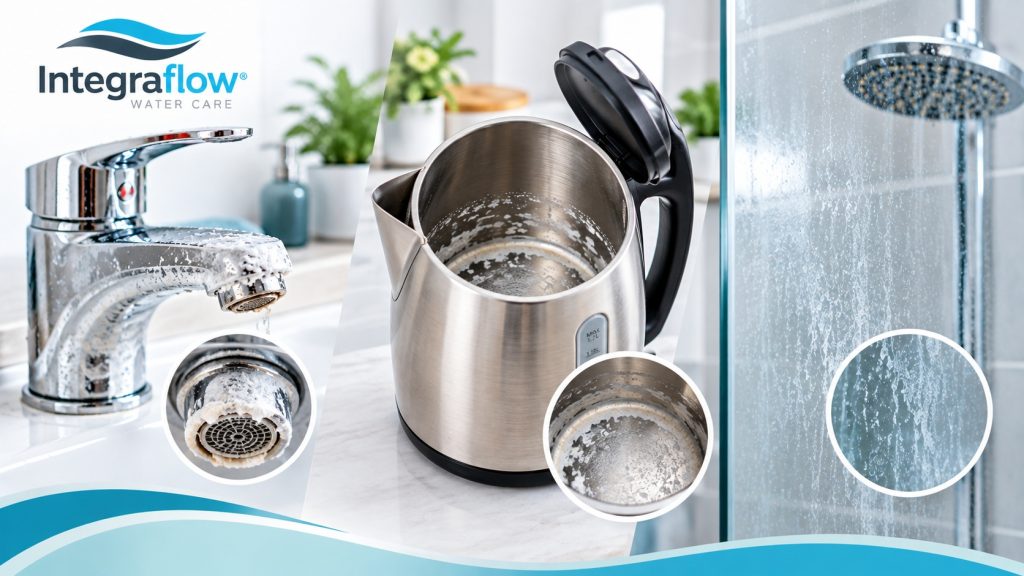
Hard water can be frustrating to deal with, especially when you notice white marks and mineral deposits around your home. You may see hard water scale on taps, cloudy marks on your shower screen, or white build-up inside your kettle.
These deposits usually come from minerals naturally present in hard water. When water evaporates from a surface, minerals such as calcium and magnesium can remain behind. Over time, this can create hard water stains and limescale that become increasingly difficult to clean.
Understanding why hard water leaves scale and how to prevent it can help you find a more practical long-term solution.
At Integraflow, we help homeowners throughout Perth understand their water treatment options and find suitable solutions based on their water source, household requirements and specific water quality concerns.
TABLE OF CONTENT
- What Is Hard Water?
- Why Does Hard Water Leave Scale on Taps?
- Why Does Hard Water Affect Kettles?
- Why Does Hard Water Leave Marks on Shower Screens?
- How to Remove Hard Water Scale
- How to Remove Hard Water Stains
- How to Remove Limescale From a Shower Screen
- How to Prevent Hard Water Scale
- How Do You Stop Hard Water From Leaving Scale?
- How Can I Reduce Hard Water in My Home?
- Hard Water in Perth
- Is Hard Water Harmful?
- Can Hard Water Damage Appliances?
- Water Softener vs Water Filter
- Can You Use a Water Softener and Water Filter Together?
- Frequently Asked Questions
- Contact Integration Today
- Get advice. Get a tailored quote.
What Is Hard Water?
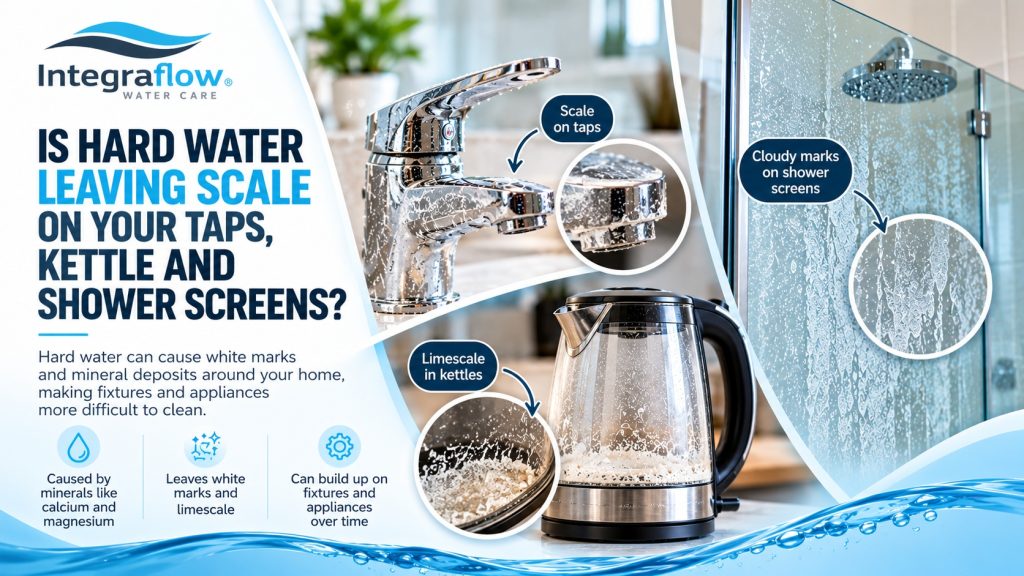
Hard water contains higher levels of naturally occurring minerals, particularly calcium and magnesium. These minerals can enter the water as it moves through rocks and soil.
Hard water does not necessarily mean your water is unsafe. However, it can cause noticeable problems around the home, including mineral build-up on fixtures, appliances, and glass surfaces.
When hard water dries, the water evaporates, but some of the minerals remain. Repeated exposure can eventually create the white or chalky deposits commonly known as hard water scale or limescale.
Why Does Hard Water Leave Scale on Taps?
If you regularly notice white marks around your kitchen or bathroom taps, you may wonder why hard water leaves scale.
The reason is simple. Hard water contains dissolved minerals such as calcium and magnesium. When water droplets remain around a tap and dry, these minerals can be left behind. If this happens repeatedly, the deposits gradually build up.
This is why you may notice hard water scale on taps around the base, spout, aerator, and other areas where water collects.
Does Hard Water Damage Taps?
Hard water can contribute to mineral build-up around taps, aerators, and fittings. The effect depends on the level of water hardness and how long the fixtures are exposed to the water.
Significant build-up can make taps more difficult to clean and may collect around small openings such as aerators. If you are constantly cleaning hard water stains on taps, it may be worth investigating whether water hardness is contributing to the problem.
Why Does Hard Water Affect Kettles?
Kettles can develop scale because the water inside them is repeatedly heated.
When you heat hard water, calcium and other minerals can settle on surfaces inside the kettle. Over time, you may notice a white or chalky layer around the bottom or near the heating element.
This is another form of hard water limescale. Regular descaling can remove existing deposits, but the scale may continue to return if you keep using hard water.
Why Does Hard Water Leave Marks on Shower Screens?
Shower screens are another common place to notice mineral deposits.
During a shower, water droplets containing dissolved minerals settle on the glass. Once the water evaporates, the minerals remain behind. After repeated showers, this can create cloudy patches, white marks, and stubborn hard water stains.
The problem becomes more noticeable when you don’t dry the shower screen after use.
How to Remove Hard Water Scale
If you are wondering how to remove hard water scale, the best approach depends on the surface and severity of the build-up.
For light deposits, regular cleaning may help prevent minerals from accumulating. More stubborn deposits may require a product specifically designed to break down mineral or limescale deposits.
Always make sure the cleaning method suits the surface, as some products can damage certain materials or finishes.
Remember that cleaning only removes the scale already there. It does not remove the minerals from the water, so the deposits can return if the underlying water hardness remains unchanged.
How to Remove Hard Water Stains
Knowing how to remove hard water stains can help keep your bathroom and kitchen fixtures looking cleaner.
The right approach depends on where the stain is located. Taps, shower screens, sinks, and appliances may require different cleaning methods.
Regularly wiping and drying surfaces can help reduce fresh water marks. For existing stains, a suitable mineral-deposit or limescale cleaner may help break down the build-up.
If stains continue returning despite regular cleaning, it may be worth investigating your household water hardness.
How to Remove Limescale From a Shower Screen
If you are searching for how to remove limescale from a shower screen, start by removing the existing mineral deposits with a suitable glass-safe cleaning product.
Heavier deposits may require multiple treatments. Once the screen is clean, drying the glass after showers can help reduce the water left behind.
However, cleaning only removes visible deposits. If your water is hard, new limescale can keep forming.
How to Prevent Hard Water Scale
Cleaning existing deposits is one thing, but preventing them from returning is another.
If you are wondering how to prevent hard water scale, regularly wiping taps and drying shower screens can reduce the amount of water left on surfaces. Regular cleaning can also stop small deposits from becoming larger build-ups.
These steps, however, do not remove the minerals from the water.
If hard water is the main cause of recurring scale, treating the water may provide a more effective long-term solution.
How Do You Stop Hard Water From Leaving Scale?
So, how do you stop hard water from leaving scale?
The best approach depends on your water hardness level and your home’s needs.
A water softener is specifically designed to treat hard water by reducing hardness minerals such as calcium and magnesium. Reducing the hardness of the water can help minimise mineral deposits on taps, shower screens, appliances and other surfaces.
You can learn more about how these systems help with scale and hard water by visiting Integration’s water softeners in Perth page.
A water softener is different from a general water filtration system. Each type of treatment is designed to address different water quality concerns.
How Can I Reduce Hard Water in My Home?
If you are asking how can I reduce hard water in my home, it is useful to start by understanding your water quality.
Water testing can help determine whether your water is hard and whether other water quality concerns may also need attention. Once you know what is in your water, you can choose a treatment option that suits your needs.
A water softener may be appropriate when hardness and scale are the main concerns. A filtration system may be more suitable for issues such as sediment, taste, odour or particular contaminants.
In some homes, both systems may be useful because they perform different functions.
Hard Water in Perth
For homeowners looking into hard water Perth solutions, water quality can vary by water source and local conditions.
If you live in Perth and regularly notice scale on taps, shower screens, kettles or other fixtures, water testing can help determine whether hardness is contributing to the problem.
Rather than choosing a treatment system based only on visible scale, understanding your water quality first can help you identify a suitable solution.
Is Hard Water Harmful?
Hard water is not automatically unsafe to drink. Water hardness mainly relates to the level of minerals such as calcium and magnesium present in the water.
The main concerns with hard water around the home are often practical, including scale, mineral deposits, cleaning difficulties, and build-up on fixtures and appliances.
If you have concerns about your drinking water, testing can help identify whether other water quality issues need addressing.
Can Hard Water Damage Appliances?
Hard water can affect appliances that regularly use or heat water.
Kettles are a clear example because mineral deposits can build up inside them. Other water-using appliances may also experience mineral build-up depending on the hardness of the water and the appliance.
Regular maintenance can help manage existing deposits. However, if scale develops quickly despite regular cleaning, it may be worth investigating the hardness of your water.
Water Softener vs Water Filter
A water softener and a water filter do different jobs.
A water softener primarily addresses water hardness. A water filtration system is designed to filter specific substances from water, depending on the filtration media and system.
For example, a filtration system may be used to address sediment, taste, odour or particular contaminants, while a softener focuses on hardness.
This means a water filter does not automatically replace a water softener, and a water softener is not a replacement for every type of water filtration system.
Can You Use a Water Softener and Water Filter Together?
In some homes, using both systems may be appropriate.
A water softener can address hardness while a filtration system targets other water quality concerns. The best combination depends on your water test results and your property’s specific needs.
Frequently Asked Questions
Why does hard water leave scale on taps?
Hard water contains minerals such as calcium and magnesium. When water droplets evaporate from taps, these minerals remain behind and gradually form scale.
How do you prevent hard water scale?
Regularly drying taps and shower screens can reduce visible deposits. Addressing the hardness of the water can help reduce recurring scale over the longer term.
How do you remove hard water scale?
You can often remove existing scale with a suitable cleaning product designed for mineral deposits. The correct method depends on the surface and severity of the build-up.
How do you remove limescale from a shower screen?
Use a product suitable for removing mineral deposits and safe for the shower screen. Heavier build-up may require repeated cleaning.
How can I reduce hard water in my home?
Start with water testing to determine the hardness level. Depending on the results, a suitable water treatment system, such as a water softener, may help reduce hardness.
Is hard water a problem in Perth?
Water quality can vary, so Perth homeowners experiencing recurring scale may benefit from water testing to determine whether hardness is contributing to the issue.
Contact Integration Today
If you are tired of cleaning hard water scale on taps, shower screens, kettles and other household fixtures, it may be time to look beyond the visible deposits.
Understanding your water quality can help you determine whether hardness is contributing to the problem and whether water treatment may be appropriate for your home.
Contact Integration Today to discuss your water quality concerns and explore suitable options for your home.
LET’S TALK WATER
Get advice.
Get a tailored quote.
Tell us what’s happening with your water and what you’d like to improve. Our initial advice and support are free.