Difference between a triple system and a water softener
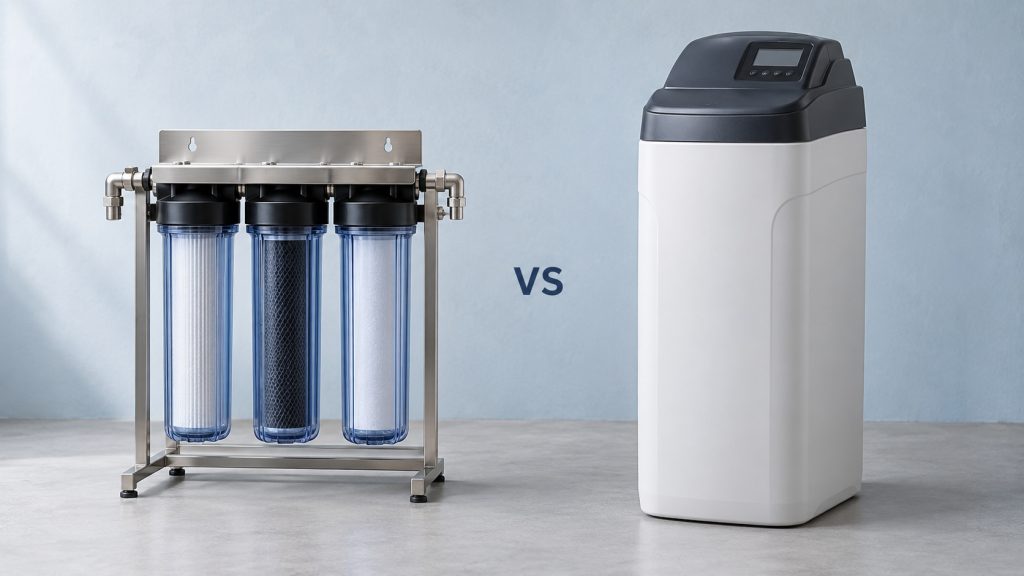
Difference between a triple system and a water softener
Choosing between a triple system and a water softener can be confusing if you are unsure what each system is designed to do. Both are used in water treatment, but they address different water quality concerns. Understanding the differences can help you choose the right solution for your household.
A triple system generally treats water through multiple filtration stages, depending on the system’s configuration and filter media. A water softener, by contrast, primarily reduces water hardness caused by minerals such as calcium and magnesium.
At Integraflow, we help homeowners throughout Perth understand their water treatment options and find solutions based on their water source, household requirements, and specific water quality concerns.
TABLE OF CONTENT
- What Is a Triple System?
- What Does a Water Softener Do?
- Difference Between a Triple System and a Water Softener
- Triple System vs Water Softener: Which Is Better?
- Is a Triple System Better Than a Water Softener?
- Which Is Better for Hard Water, a Triple System or Water Softener?
- Can You Use a Triple System and Water Softener Together?
- Choosing a Triple System for Home Use
- Frequently Asked Questions
- Contact Integraflow Today
- Get advice. Get a tailored quote.
What Is a Triple System?
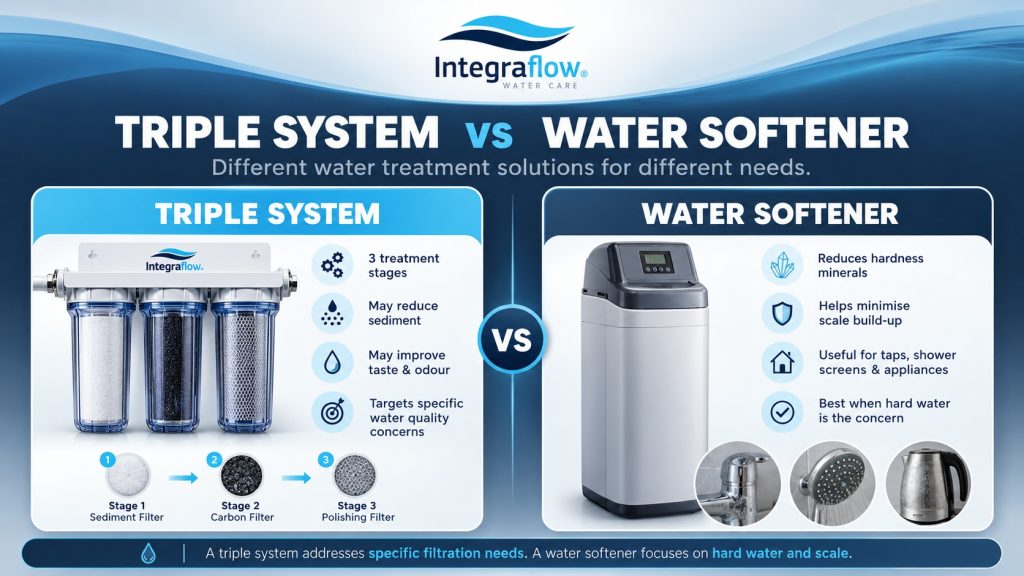
A triple system uses three treatment stages to address specific water quality concerns. Each stage’s function depends on the system’s design and the filtration media used.
Some systems may include stages for reducing sediment, improving taste and odour, or targeting specific substances in the water. To learn more about available options, explore Integraflow water filtration systems and how they may help address your household’s water quality needs.
A triple system may suit households that want to improve specific aspects of their water quality. The right system depends on the water source and the substances you need to treat.
What Does a Triple System Do?
If you are wondering what a triple system does, the answer depends on how it’s configured.
Its three stages work together to treat water based on each filter or treatment component’s purpose. For example, a system may use sediment filtration to capture particles and other media to target specific water-quality concerns.
Don’t assume a triple system will automatically remove every contaminant or reduce water hardness. Its capabilities depend on the individual system, so check which substances it is designed to address before making a decision.
What Does a Water Softener Do?
A water softener primarily reduces water hardness. Hard water contains dissolved minerals, particularly calcium and magnesium, that can build up scale around the home.
You may notice hard water’s effects on taps, shower screens, kettles, and other appliances. Mineral deposits can build up over time, leaving visible marks and increasing cleaning and maintenance needs.
Many conventional water softeners use an ion-exchange process to remove hardness minerals. This can help minimise scale formation and improve the effects associated with hard water.
However, a water softener is not designed to perform every function of a filtration system. If you also have concerns about sediment, taste, odour or other substances, additional filtration may be required.
Difference Between a Triple System and a Water Softener
The main difference between a triple system and a water softener is their intended purpose.
A triple system uses three treatment stages to address specific water quality concerns, while a water softener primarily reduces water hardness.
Here are the key differences to consider:
01
Triple system
- Uses three treatment stages, depending on the system design.
- May target sediment, taste, odour or other specified substances.
- Is suitable for particular water quality requirements when its filtration capabilities match those needs.
- Does not necessarily reduce water hardness.
02
Water softener
- Primarily reduces hardness minerals such as calcium and magnesium.
- Helps minimise scale build-up on taps, shower screens and appliances.
- Is useful when hard water is a concern throughout the household.
- Does not automatically remove other contaminants or replace all types of filtration.
If you want to understand the differences between these treatment options in more detail, read our guide to water softeners vs water filters.
Neither system is a direct replacement for the other in every situation. The best option depends on the water quality issues you want to address.
Triple System vs Water Softener: Which Is Better?
When comparing a triple system vs a water softener, consider what you want the system to achieve.
If your main concern is a particular water quality issue, such as sediment or unpleasant taste and odour, a suitable triple system may be worth considering. You should confirm that its filter media is designed to address the specific concern.
If your main problem is hard water, mineral deposits, and recurring scale, a water softener may be a better option.
There is no single answer for every household. The most suitable system depends on your water source, the results of any water testing, and the performance specifications of the available systems.
Is a Triple System Better Than a Water Softener?
A triple system isn’t automatically better than a water softener because the two systems serve different purposes.
A triple system may be a better fit if its treatment stages address your specific water-quality concerns. A water softener is generally more appropriate when the main issue is hardness caused by calcium and magnesium.
Also consider the intended use of the treated water. A system designed for drinking water may not suit treating the entire household supply.
Before choosing either option, identify the problem you want to solve and check whether the system is designed to address it.
Which Is Better for Hard Water, a Triple System or Water Softener?
If you’re dealing with hard water, a water softener is generally the better choice.
A conventional triple system may filter certain substances from water, but that does not mean it will reduce hardness minerals. Unless the system is specifically designed and verified to reduce hardness, it should not be considered a replacement for a water softener.
Hard water can leave scale on bathroom fixtures, kitchen taps and appliances. A suitable softening system can help address these issues by reducing the minerals responsible for hardness.
If you are unsure whether your household has hard water, water testing can help determine the hardness level and whether a softener is appropriate.
Can You Use a Triple System and Water Softener Together?
Yes, you can use a triple system and a water softener together when a household has different water treatment needs.
For example, you may install a water softener to address hardness while using a triple system to target other water quality concerns. The suitability of this arrangement depends on the systems’ specifications, the water source, and the intended use.
However, not every household needs both systems. Installing multiple treatment systems without understanding the water quality can add unnecessary costs and maintenance.
Water testing and a review of available treatment options can help determine whether one system is sufficient or whether a combination is more appropriate.
Choosing a Triple System for Home Use
If you are considering a triple system for home use, look beyond the number of filtration stages. Three stages do not automatically mean that a system is more effective than another option.
Consider the following before making your decision:
- Water source: Determine whether your household uses mains water, bore water or another supply.
- Water quality concerns: Identify whether you are concerned about sediment, taste, odour, hardness or other substances.
- System capabilities: Check what each treatment stage is designed to reduce.
- Installation requirements: Confirm whether the system is intended for one drinking water outlet or the wider household supply.
- Maintenance: Consider filter replacement, servicing requirements, and ongoing costs.
These factors can help you choose a system that meets your needs rather than paying for features you may not require.
Frequently Asked Questions
What is the difference between a triple system and a water softener?
A triple system uses three treatment stages to address specific water quality concerns, depending on its design. A water softener primarily reduces hardness minerals such as calcium and magnesium. The two systems serve different purposes.
Is a triple filter the same as a water softener?
No. A triple filter generally uses three filtration stages to treat water, while a water softener primarily reduces water hardness. Only consider a triple filter a softening solution if its specifications confirm that capability.
What does a triple system do?
A triple system treats water through three stages, with each stage performing a particular function. What it can reduce depends on the filter media and the system’s design.
Is a triple system better than a water softener?
Neither system is automatically better. A triple system may suit specific filtration needs, while a water softener is generally better for reducing hard water and associated scale.
Do I need a triple system if I already have a water softener?
It depends on your water quality and treatment requirements. A water softener may address hardness, while a triple system may target other substances. Water testing can help you determine whether additional filtration would be beneficial.
Contact Integraflow Today
Choosing between a triple system and a water softener starts with understanding your water quality and the results you want to achieve.
Integraflow can help you explore suitable water treatment options based on your household requirements and water source. Whether you are concerned about filtration, hard water or both, choosing the right system can help you make a more informed decision.
Contact Integraflow Today to discuss your water treatment needs and find the options best suited to your home.
LET’S TALK WATER
Get advice.
Get a tailored quote.
Tell us what’s happening with your water and what you’d like to improve. Our initial advice and support are free.